Artificial intelligence continues to transform digital creativity, and the modern AI image generator market now includes tools built for very different creative goals. Some platforms focus on simplicity and speed, while others prioritize advanced customization, cinematic quality, or integrated production workflows. As AI-generated visuals become more common across social media, advertising, design, and entertainment, creators increasingly look for platforms that can balance output quality with usability and workflow efficiency.
The following AI image generator tools represent a broad range of creative approaches in 2026. Each platform offers different strengths depending on whether the user prioritizes artistic experimentation, photorealistic rendering, editing flexibility, or multimedia production support.
1. Pollo AI
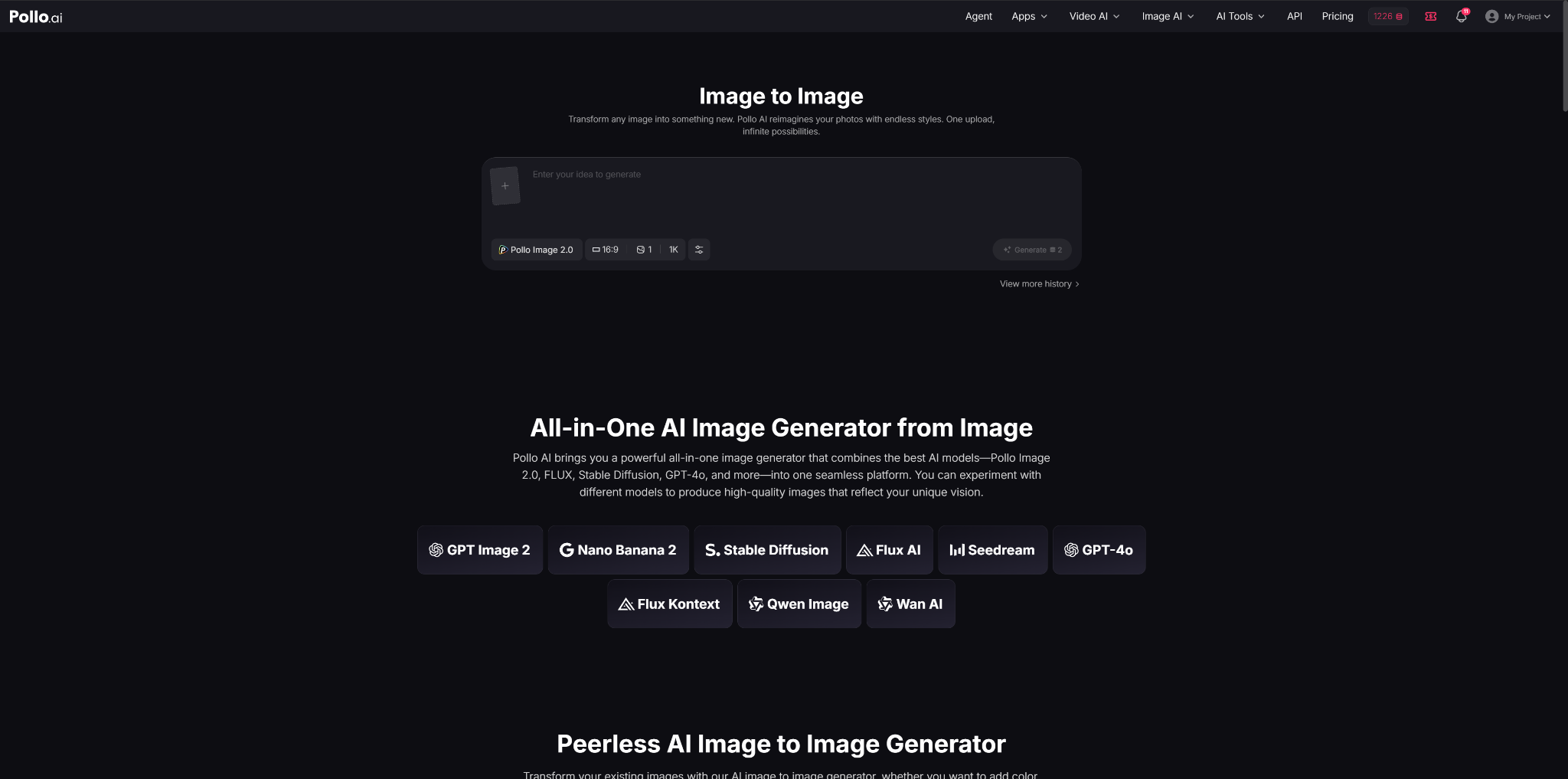
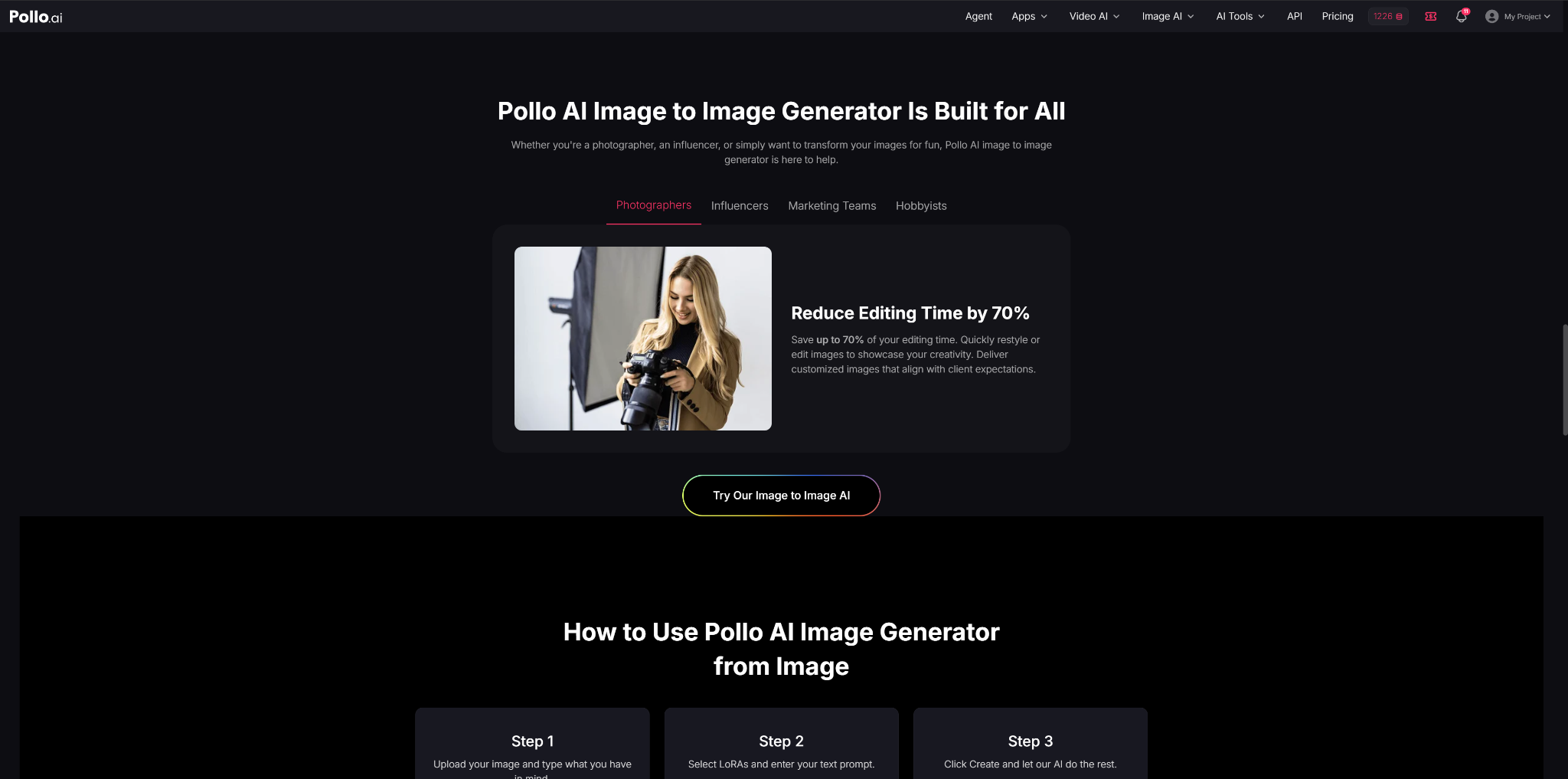
Pollo AI positions itself as an all-in-one AI image generator built for users who need both image generation and image transformation capabilities within a single platform. Instead of relying on only one model, the platform integrates multiple AI systems including Pollo Image 2.0, FLUX, Stable Diffusion, GPT-4o, Nano Banana 2, Seedream, Qwen Image, and Wan AI, allowing users to experiment with different generation styles depending on their creative goals. One of its major features is the image-to-image workflow, which allows users to upload an existing image and transform it into entirely different visual styles using text prompts. The platform also supports over 2,000 LoRAs for different themes, artistic styles, profile pictures, ecommerce product scenes, fantasy visuals, and anime-inspired artwork such as Studio Ghibli-style images. Its interface is designed to simplify creation for beginners while still supporting high-volume creative production.
Why It Is Worth Using
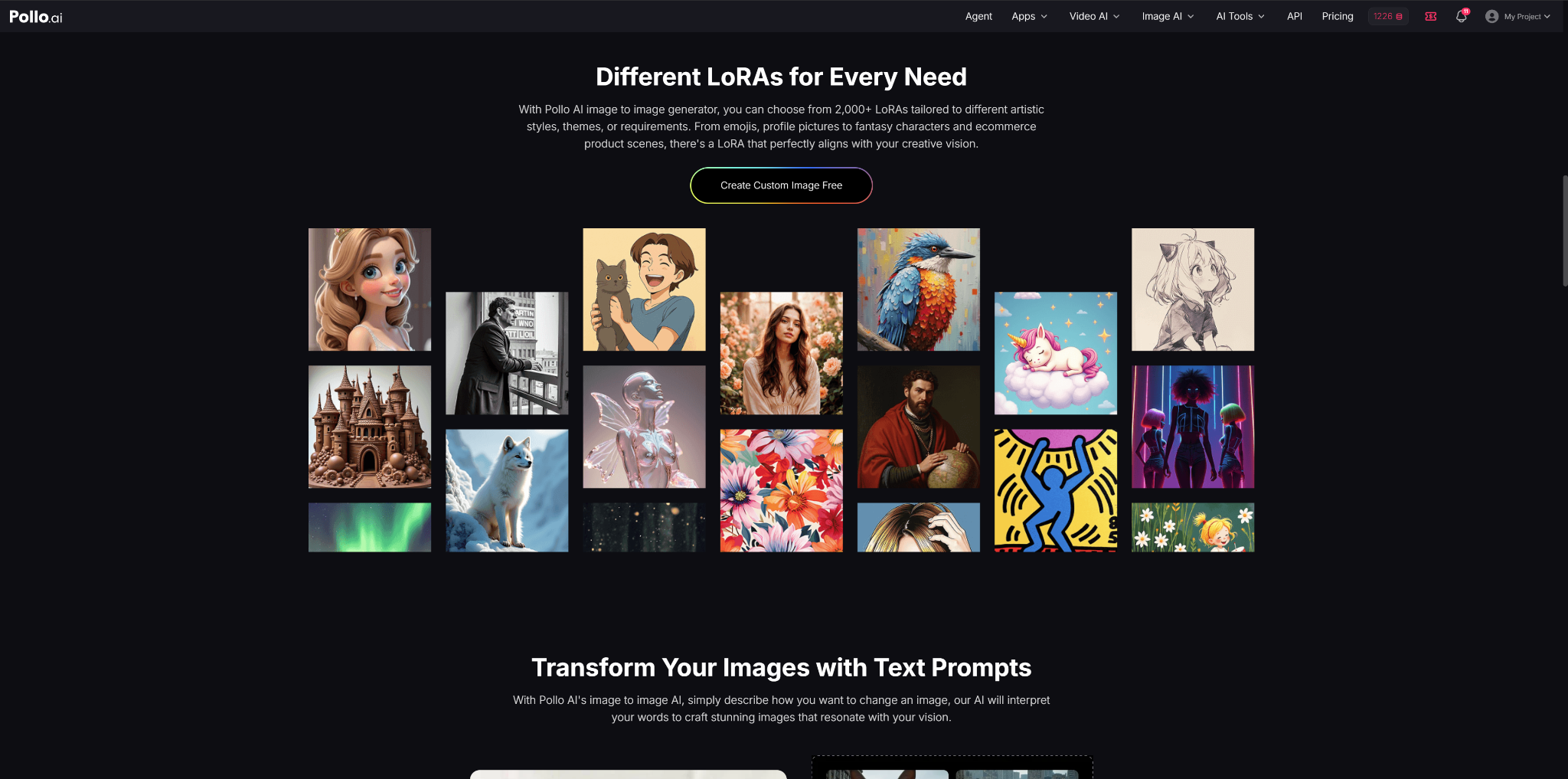
Pollo AI stands out because it combines image generation, image editing, and style transformation into one streamlined workflow. Users can quickly restyle photos, generate marketing visuals, create social media graphics, or produce ecommerce product imagery without moving between different software platforms. The platform also gives users access to advanced models, including the GPT Image 2 model on Pollo AI, allowing creators to experiment with different rendering styles and image qualities inside a single ecosystem. The image-to-image system is especially useful for photographers, influencers, marketing teams, and hobbyists who want to transform existing visuals with minimal editing effort. The large LoRA library also gives users far more stylistic flexibility than many traditional AI image generator platforms. In commercial use cases, the platform is practical for ad creatives, branded content, product promotions, and social media campaigns because it can rapidly produce multiple visual variations from a single source image. Its combination of accessibility, multi-model support, and workflow efficiency makes it highly adaptable for both casual and professional creators.
2. Nano Banana 2
Nano Banana 2 focuses on artistic experimentation and stylized image generation rather than strict realism. The platform is designed for creators who want visually bold outputs, fantasy-inspired concepts, surreal imagery, and exaggerated artistic aesthetics. Instead of emphasizing technical precision, Nano Banana 2 encourages fast iteration and creative exploration, making it particularly suitable for concept art, mood boards, and imaginative digital content. Its lightweight interface allows users to generate multiple visual variations quickly without dealing with overly technical controls or advanced prompt engineering. The platform is often associated with visually expressive compositions that feature strong color palettes, abstract structures, and highly stylized rendering approaches.
Why It Is Worth Using
Nano Banana 2 is valuable because it prioritizes creativity and accessibility over complicated technical workflows. Users can rapidly experiment with artistic concepts and explore unconventional visual directions without spending large amounts of time adjusting detailed parameters. This makes the platform useful for artists, designers, social media creators, and independent content producers who need inspiration or visually distinctive outputs. It performs especially well for fantasy artwork, stylized portraits, music visuals, and experimental social media graphics. While it may not provide the advanced production infrastructure or customization depth of larger AI systems, its focus on originality and fast ideation gives it a clear advantage for creators who value artistic freedom and rapid visual experimentation.
3. Stable Diffusion
Stable Diffusion remains one of the most influential AI image generator systems because of its open-source ecosystem and extensive customization capabilities. Unlike many browser-based platforms, Stable Diffusion allows users to install models locally, train custom datasets, and integrate advanced generation workflows into their own creative pipelines. The platform supports text-to-image generation, image editing, inpainting, ControlNet guidance, and LoRA-based style training, giving creators precise control over composition and artistic consistency. Its open development community has also produced thousands of custom checkpoints and extensions, allowing users to experiment with highly specialized visual styles ranging from photorealistic rendering to anime-inspired art and cinematic illustration.
Why It Is Worth Using
Stable Diffusion is especially valuable for advanced creators who prioritize flexibility and creative control. Because the platform is open-source, users can customize nearly every aspect of the generation process and build workflows tailored to their specific artistic or commercial needs. It is widely used by AI artists, developers, studios, and technical creators who require consistent visual outputs across long-term projects. The ability to run the system locally also appeals to users who prefer greater privacy and full ownership over their production environment. Although the learning curve can be steeper than beginner-focused AI image generator tools, Stable Diffusion offers one of the most adaptable ecosystems available for professional-level image generation and experimentation.
4. ChatGPT Image 2
ChatGPT Image 2 approaches the AI image generator experience through conversational interaction rather than relying entirely on traditional prompt engineering. Users can refine images by describing adjustments, styles, compositions, and visual ideas in natural language, allowing the creative process to feel more iterative and intuitive. The platform is designed for accessibility, making it useful for creators who want fast visual ideation without navigating highly technical generation settings. It supports a wide variety of use cases including storytelling visuals, educational graphics, social media content, presentation imagery, and conceptual artwork. The integration between language understanding and image generation also helps users refine vague ideas into clearer visual outputs through continuous interaction.
Why It Is Worth Using
One of the biggest advantages of ChatGPT Image 2 is its ease of use. Instead of repeatedly rewriting complex prompts, users can gradually improve an image through conversational feedback and contextual instructions. This reduces the technical barrier often associated with AI image generation and makes the platform highly approachable for beginners, educators, marketers, and writers. It is particularly effective for brainstorming, content planning, and fast concept development where workflow speed matters more than highly advanced customization. While it may not offer the same depth of technical control as open-source systems, its intuitive interaction model makes it a practical AI image generator for everyday creative tasks and collaborative ideation workflows.
5. Runway
Runway positions itself as a broader AI-powered creative suite that combines image generation with video editing, motion graphics, and cinematic production tools. Within the AI image generator category, the platform focuses heavily on multimedia workflows rather than standalone image creation. Users can generate concept frames, mood boards, promotional visuals, and stylized compositions while integrating those assets into larger video and storytelling projects. The platform is particularly popular among filmmakers, advertising teams, digital agencies, and creators producing multimedia campaigns because it supports workflows that move efficiently between still imagery and motion-based content production.
Why It Is Worth Using
Runway is valuable for creators who need an AI image generator that fits naturally into professional multimedia workflows. Its biggest advantage is the ability to connect image generation with cinematic editing and video production tools inside the same environment. This makes it especially useful for advertising campaigns, music videos, short films, branded storytelling, and social media content that combines static visuals with motion graphics. The platform also emphasizes production efficiency and collaborative workflows, which can help creative teams manage complex projects more effectively. While casual users may not need its broader production capabilities, Runway performs particularly well for creators seeking AI-assisted tools that support both visual ideation and multimedia content creation.
Final Thoughts
The AI image generator market now includes platforms tailored to very different creative priorities. Some tools emphasize simplicity and accessibility, while others focus on technical depth, artistic experimentation, or multimedia production capabilities.
Pollo AI stands out for its balanced all-in-one workflow structure and accessibility across multiple creative use cases. Nano Banana 2 appeals to users interested in imaginative artistic exploration, while Stable Diffusion remains one of the strongest choices for advanced customization and open-source flexibility. ChatGPT Image 2 introduces a conversational approach to image generation, and Runway continues to expand AI-assisted multimedia production.
As AI-generated visuals become increasingly integrated into digital workflows, creators are likely to continue selecting tools based on workflow compatibility, output style, and production efficiency rather than relying on a single universal solution.
More Stories
What Every Female Entrepreneur Needs to Know About Email Deliverability?
Exclusive CS2 Skins on Key-Drop: How to Participate in Limited Drops
The Different Types of Online Slots and How They Compare